
Planning permission for a fence in Paris: the Déclaration Préalable explained
Karim·May 26, 2026·8 min
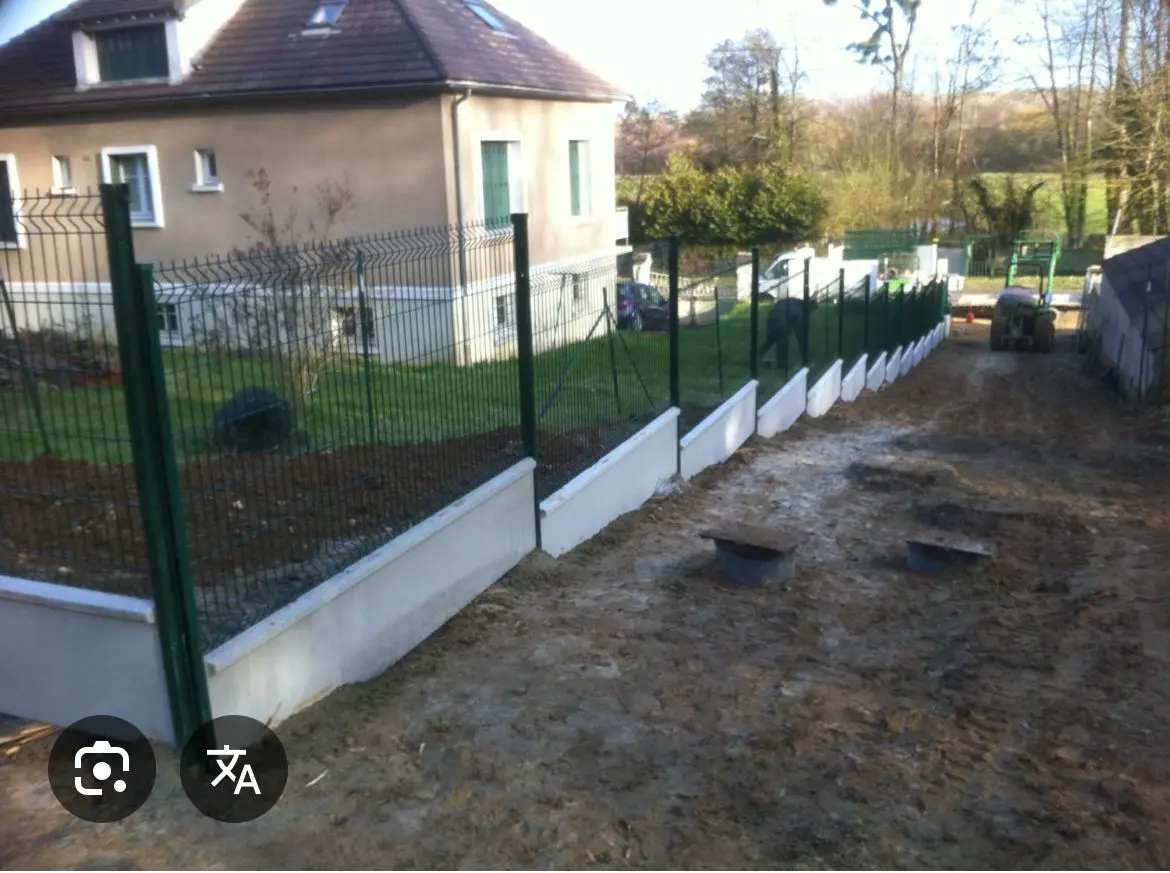
What is a Déclaration Préalable?
A Déclaration Préalable (DP) is a simplified planning authorisation, less demanding than a full building permit, required for small-scale works such as fence installation, allowing the local authority to verify that the project complies with local planning rules.
In Paris and Île-de-France, installing a fence may seem straightforward, but the administrative requirements are often unknown to property owners. Ignoring them can lead to fines, neighbour disputes or even a demolition order. This guide explains everything you need to know to stay compliant.
Fencing Installation
Secure your green space with our custom-made wood, PVC or aluminium fences.
Discover this serviceWhen is a Déclaration Préalable required?
The general principle
French planning law (Article R421-12 of the Code de l'urbanisme) makes a DP mandatory for all fences in certain zones, and systematically required for any fence exceeding 2 metres in total height.
Cases where a DP is required in Paris
1. All fences without exception In most Île-de-France municipalities, and in particular within Paris, the PLU requires a DP for any fence creation regardless of height when the property is located:
- In a listed heritage zone or ABF perimeter
- In a UA, UB or UC PLU zone (covering virtually all of Paris)
- Visible from a public road
2. Fences over 2 metres Nationwide, any fence exceeding 2 metres total height (base + panel + coping) requires a DP.
3. Fences on shared boundaries In some municipalities, fences on the shared boundary with a neighbour require a declaration even below 2 metres.
Exceptions (no declaration needed)
Outside ABF zones and dense urban areas, some fences can be built without formalities: fences under 2 metres outside any protected zone, agricultural fences in rural zones, or like-for-like replacement of an existing fence (in some municipalities).
Always check with your local mairie's planning department before starting any work.
Completing the Déclaration Préalable
Cerfa form 13703*08
The DP for a fence is submitted on Cerfa form n°13703*08, available to download at service-public.fr or from your local mairie.
Documents to include
| Document | Description |
|---|---|
| Location plan (DP1) | Map locating the plot within the municipality |
| Site plan (DP2) | Scale plan showing the exact fence location, distances to boundaries and existing buildings |
| Cross-section (DP3) | If the plot slopes — showing actual fence height |
| Existing state photos (DP5) | Views from the public road and from inside the plot |
| Visual integration document (DP6) | Photomontage or drawing showing the project in its surroundings |
| Descriptive note | Materials, colours and height of the proposed fence |
Processing timelines
| Situation | Standard timeline |
|---|---|
| Standard DP | 1 month |
| ABF perimeter | 2 months |
| Specific protected zones | 3 months |
Silence from the mairie after the processing deadline constitutes tacit approval. Keep proof of submission.
The role of the Architectes des Bâtiments de France (ABF)
ABFs are civil servants who protect architectural and landscape heritage. They must give their opinion on any project located within 500 metres of a listed historic monument or within a Site Patrimonial Remarquable (SPR). In Paris, these perimeters cover a very large proportion of the intra-muros territory.
In Paris, the ABF's opinion is generally binding (avis conforme) — if the ABF refuses, the DP cannot be granted even if the mairie is favourable.
What do ABFs look for in fences?
Materials accepted: Wrought iron, powder-coated aluminium in sober shades (anthracite grey RAL 7016, black RAL 9005), natural stone, old brick.
Materials generally refused: PVC, chipboard, plastic, bright or garish colours.
Transparency: ABFs generally prefer partially transparent fences (railing) over fully opaque designs that block the public realm.
Common mistakes to avoid
- Starting works without authorisation — administrative fines, demolition orders, neighbour recourse.
- Underestimating ABF requirements — contact the UDAP for an informal prior opinion before selecting materials.
- Not displaying the authorisation — mandatory once works begin, visible from the public road.
- Forgetting the 2-month third-party recourse period — neighbours can challenge your authorisation during this time.
FDM ENERGIE knows Paris ABF and PLU requirements inside out. We advise on materials and heights that will be approved, and can help you prepare your Déclaration Préalable application. Contact us for advice or a free quote.