
How to insulate a flat roof in Paris without losing height?
Karim·April 1, 2026·3 min
The challenges of insulating flat roofs in the city
Energy renovation of Parisian buildings is a major issue. Insulating a flat roof (roof-terrace) must often be done from the outside while respecting the strict height limits imposed by the Local Urban Plan (PLU). Meeting this technological challenge safely prevents thermal losses, which can account for up to 30% of a building's overall energy loss.
Terrace Waterproofing
No more leaks: continuous liquid membranes and guaranteed solutions.
Discover this serviceExternal insulation: The golden rule
Unlike traditional pitched roofs, it is strongly advised not to insulate a flat roof from the inside (under the structural slab). Internal insulation shifts the dew point and inevitably causes condensation within the structure, leading to irreversible damage and severe mold issues.
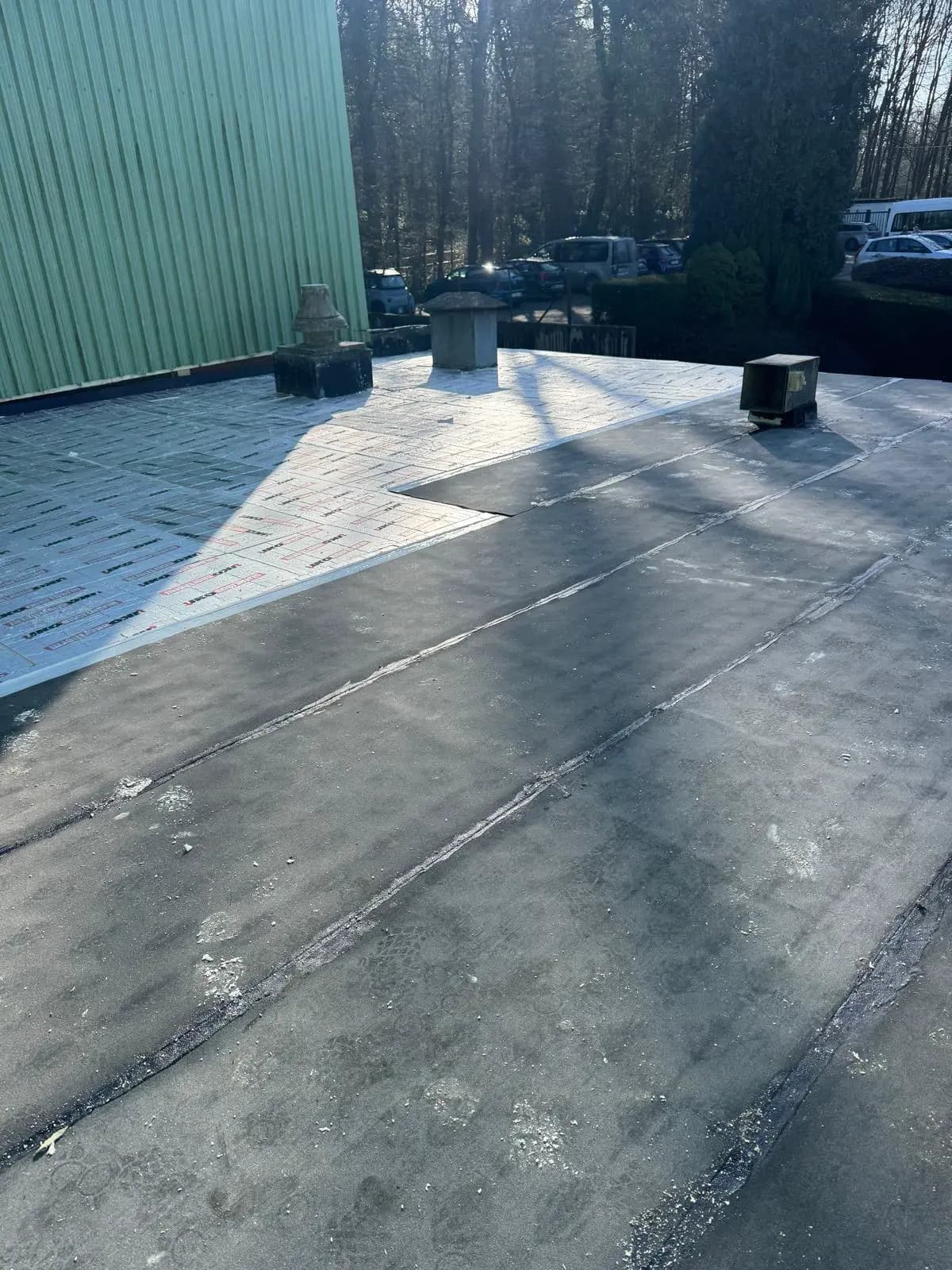
The universally recommended solution is the Warm Roof, where the insulation is placed on top of the structural support, right below the final waterproof covering.
Finding the right ultra-high-performance insulation
The main challenge in Paris is to insulate without drastically raising the floor level. If the flat roof is accessible (e.g., a French door opening onto a terrace), adding 20 centimeters of bulk would physically block the doors from opening, requiring heavy structural masonry.
Low-profile insulation solutions:
- Polyurethane (PIR / PUR): Boasting exceptional thermal conductivity, PIR boards achieve an excellent thermal resistance (R = 4.5) with a thickness of only about 10 to 12 cm, compared to nearly 20 cm required for mineral wool.
- Extruded Polystyrene (XPS): Highly resistant to compression, XPS is ideal for 'Inverted Roofs', where the insulation sits directly on top of the waterproofing, covered by a layer of gravel to weigh it down securely.
- Vacuum Insulation Panels (VIP): The pinnacle of thinness. Offering the same insulating power as classic polyurethane but only a few centimeters thick, this advanced method relies on core vacuums wrapped in foil.
Managing upstands, a vital step
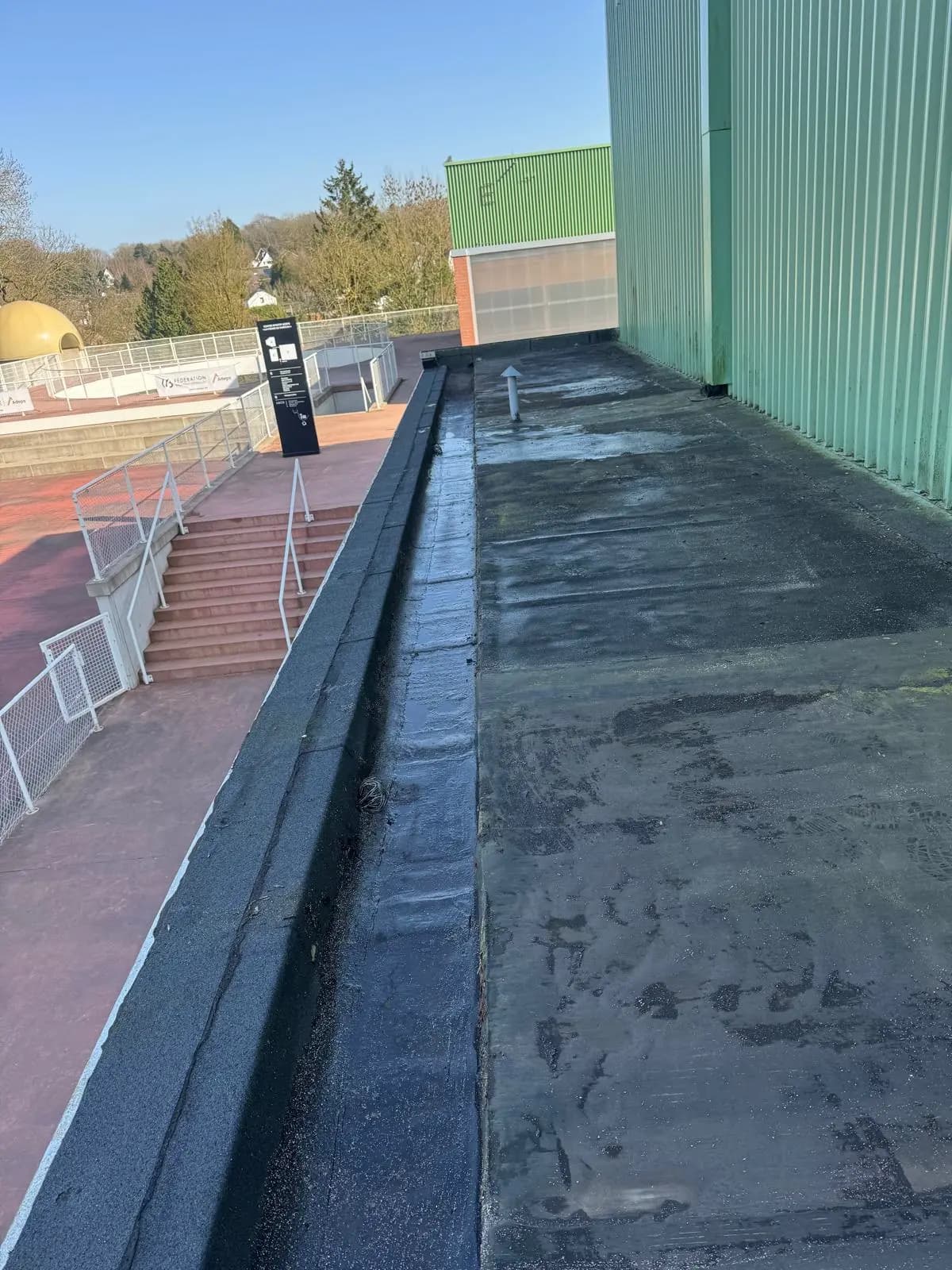
Whatever the technique, the "waterproofing upstands" (relevés d'étanchéité) must be properly treated. This is the process of continuing the waterproof and insulated layer vertically along boundary walls or parapets to ensure a perfect 90-degree seal against heavy rain. Standards dictate a minimum vertical height for this seal, requiring meticulous treatment around existing doors and frames.
If raising the floor pushes over the threshold limit of your terrace, FDM ENERGIE teams deploy Liquid Waterproofing Resins (SEL). This offers incredible adaptability around narrow door channels without sacrificing thermal performance.
Taking advantage of State aid
Flat roof insulation remains one of the most highly subsidized energy upgrades in France. Using accredited experts like FDM ENERGIE makes you eligible for:
- CEE premiums (Energy Saving Certificates)
- MaPrimeRénov' 2026, which can cover thousands of euros in a global renovation scope.
- A reduced VAT rate of 5.5%.
Need an expert thickness and waterproofing diagnostic for your project? Our technical teams travel across Paris to take precise measurements and propose your optimal insulation system.